A marathon project
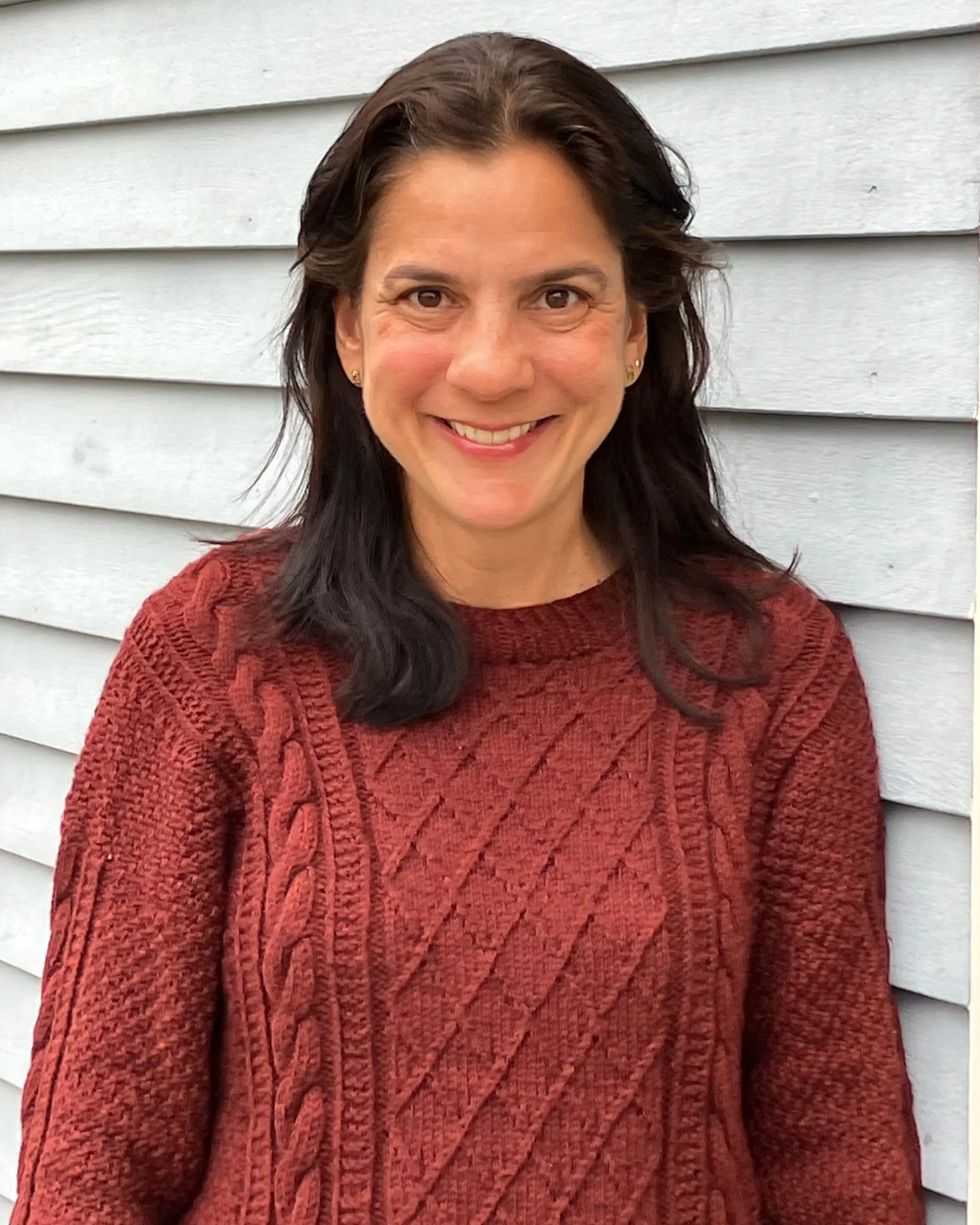
Last week I finished a challenging knitting project. It’s the second year in a row that I’ve tackled a complicated sweater over the winter months that I finished in time for the Boston Marathon. If you had told me even last year that I could make something like this, I wouldn’t have believed you, and I couldn’t be more proud! I also went to watch part of the marathon on Monday, and was so inspired by the runners, as I continue my own running journey. It seemed like a good occasion to share the lessons I’ve learned from knitting, running, and how we think about proficiency that apply to any academic project, whether you are trying to finish your dissertation (the ultimate marathon), publish a paper, or commit to your next project.
Build fitness first. There’s a reason you have written many papers before you write a dissertation. You need a solid foundation before you embark on a huge project. In running, you build up a bank of miles, making it easier to run more miles. For knitting, you make a lot of scarves and hats and learn the fundamentals before you tackle a larger project. I practiced with cablework on other smaller items before I felt ready to do this sweater. We know that the only way to develop proficiency is to practice tasks and functions related to the skills you want to perform well. You won’t improve without targeted practice. Writing is the same: the more you read and write, the easier it becomes to write more and take your work to the next level. All of this is its own form of fitness, or readiness for the task at hand.
Test the foundation. Make sure the project has a chance to work out before you commit to it. For running, you do this with sustained training, and perhaps some test races. For knitting, it’s the gauge swatch, which allows you to make sure the yarn and needles you plan to use will result in a product that is the right size. If you don’t get the gauge, you have to adjust your needles. I didn’t do a swatch once after I had some experience making successful sweaters. I thought, surely it will be fine. And it did not work out well at all! The writing equivalent of the gauge swatch is a solid grounding in the material, a detailed outline, and feedback from others. You have to make sure your argument and your plans are sound.
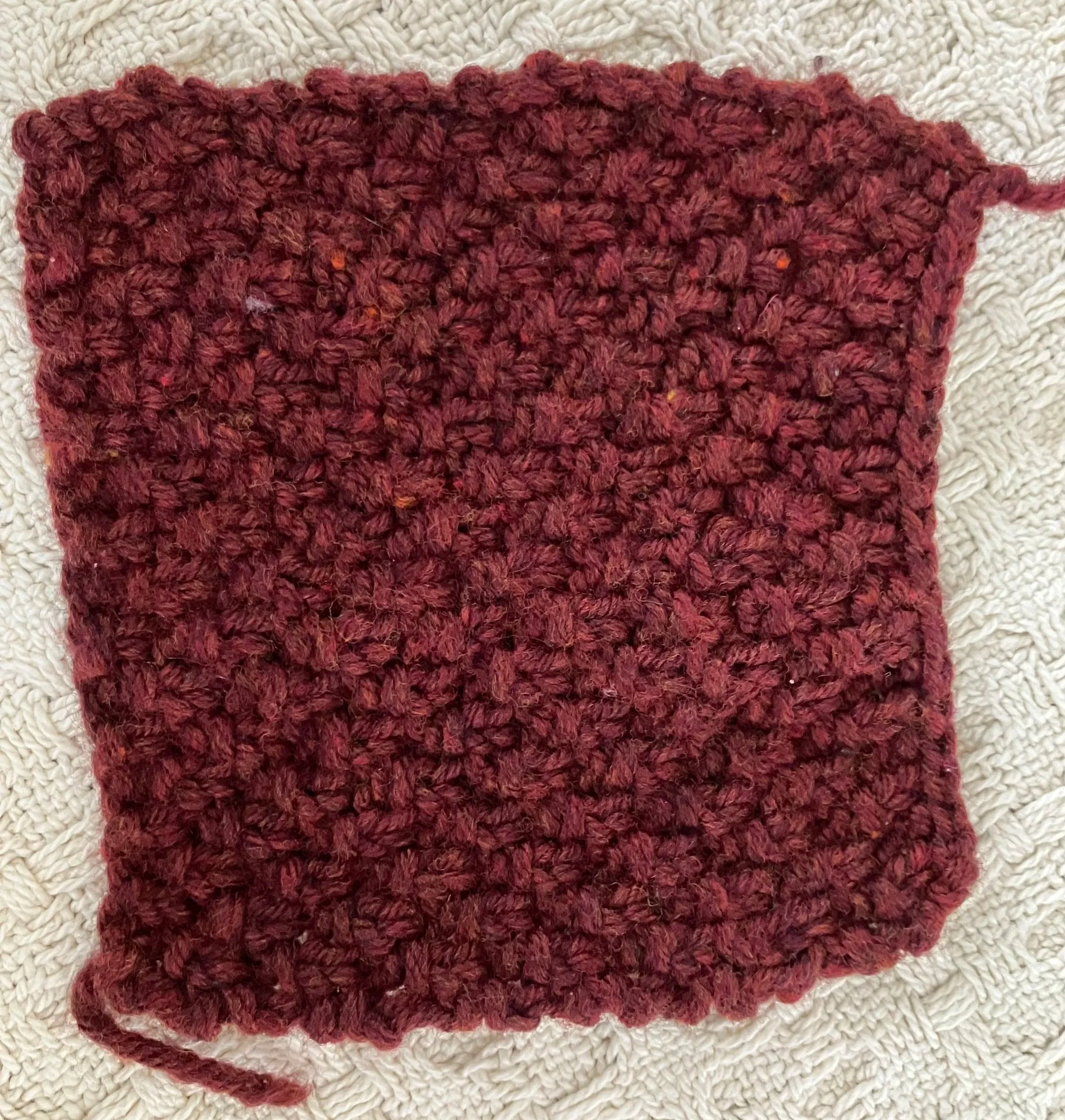
Gauge swatch
Decide what’s good enough. It will never be perfect. Mistakes are inevitable. When you knit, you can see them. Sometimes you don’t see them right away. And then only you, the maker, can decide if it is worth it to rip it out and start again. For this particular sweater, I started over three times before I got the beginning of the project right. The process of starting over helped me understand better what I needed to do, so the project went more smoothly from there. Other times I notice a mistake and decide to leave it, that it’s not worth going back. Only you can decide what you can live with, but you have to know it will never be perfect. Part of the charm of a handmade item is the little flaws that only the maker can see. Of course you can’t leave fundamental flaws in your writing, but it may be ok that some parts are not as developed, or that you have some small gaps. Those are what you will cover in your next project! When you are writing a dissertation or trying to publish an article, you have to get approval, so you may get some help on deciding what’s good enough, but you should have a vision and be able to prioritize. In the end, you need to feel good about what you are putting out there.
Be in the moment you are in. When I start a sweater, I read the full pattern first, to have the general idea of what will be expected at each stage. Usually there are parts that don’t make sense to me, and I take note of them, but my typical strategy is to not worry too much about them until I get to that part. Usually once I am there I figure it out pretty quickly. When you are running mile 4, you can’t be worried about what will happen in mile 15. You have to focus on mile 4. In writing, you have to write the part you are writing, but you are doing a delicate dance of being present in that, while also thinking and making connections for the sections to come, or even realizing you might need to go back to add something to an earlier section. I think that’s true of all of these activities. You have to be where you are at the same time that you keep what came before and what’s coming next in the back of your mind. The key is trusting that you will know what to do when you get there, that you will be able to handle it.
Don’t give up. Handling the larger scale of work and the inevitable delays and setbacks that come from undertaking a complicated project with many moving parts is what makes marathon projects different. You may have made hats or written short papers, but tackling a more involved project means more than doing the work. It requires time management, planning and organizational skills, patience, and persistence. In the end, the main thing that got those runners to the finish line on Monday was the determination to keep going when they wanted to quit. Sustained effort over time gets you there. Slow and steady is always better than fast but inconsistent.
Find your cheerleaders. No one does it alone. You need people to keep you going. We won’t all have thousands of people cheering us on like the Boston marathoners, but who are your people? In addition to your mentors, you need at least one person you can talk to who won’t judge, and will support you unconditionally. I am lucky to have a great friend who is also my knitting advisor, to help me process when I get stuck, who always has good ideas, and can help me fix my knitting when I can’t figure it out. We all need someone like that!
What is your marathon project? Do you need a partner to help you process your plans, figure out your goals, or motivate you to keep going? I am here and can’t wait to talk to you!
